

1. Understanding psychologically healthy and safe workplaces
A psychologically healthy and safe workplace is one that promotes staff mental health, safety, and wellbeing by reducing work-related risk factors and psychosocial hazards, actively prevents and addresses mental injury and illness and supports recovery.
Psychosocial hazards are factors in the way that work is organised, designed or managed, or in interactions between people in the workplace, that may cause an employee to experience a negative psychological response and create a risk to their health and safety.
It is the shared responsibility of the department, school leaders, and all school staff to contribute to a psychologically healthy and safe workplace.
As part of a schools’ OHS management practices, the principal or their delegate, in consultation with staff and HSR/s where elected, must, so far as is reasonably practicable:
- identify psychosocial hazards
- assess associated risks to health or safety
- control the risks
- monitor, review and, where necessary, revise risk controls.
What is ‘reasonably practicable’ will depend on the circumstances, organisation and environment. To determine what is ‘reasonably practicable’, you can ask yourself the following questions (either about yourself, or someone else involved):
- How likely is it that the risk or hazard I’m concerned about could occur?
- If the risk or hazard did occur, could someone suffer harm? how serious could that harm be?
- How aware or knowledgeable am I about the hazard or risk?
- What training or information have I received that is relevant to it?
- What measures, if any, were put in place to reduce or eliminate the hazard or risk?
- Are there ways that I could eliminate or reduce the hazard or risk?
- If so, what is available and practical?
- If so, what is appropriate to the circumstance?
- Are there any costs involved in eliminating or reducing the hazard and risk? Would any such cost prevent you from being able to eliminate or reduce the hazard or risk?
For further information refer to How WorkSafe Victoria applies the law in relation to Reasonably Practicable(opens in a new window).
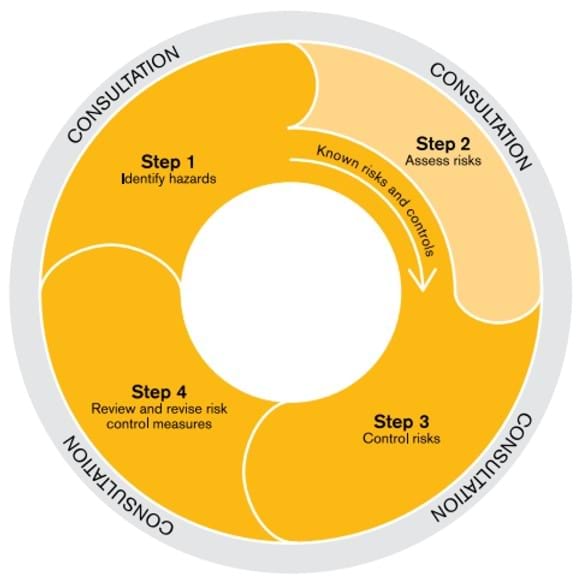
The diagram below outlines the ongoing OHS risk management process to identify hazards, assess risk, control risk, review controls, and consult with employees throughout.
Psychologically healthy and safe workplaces can greatly improve an individual’s experience of work and increase individual mental health and wellbeing. When staff feel safe at work, issues and risks are likely to be raised early, understood and addressed before they cause an injury.
There are a number of department policies that schools must follow that provide controls for managing psychosocial risks, including sexual harassment, workplace bullying, managing and reporting school incidents. For a full list of related policies please refer to the updated OHS risk register, Psychosocial Hazards and DE Controls Library in the Resources tab and the related polices section in the Policy section on this page.
It is the responsibility of all staff to contribute to a psychologically healthy and safe workplace.
There are several factors that can contribute towards building psychologically healthy and safe workplaces. This includes proactive and supportive leadership, positive culture, inclusivity, and effective consultation and communication.
For further information on proactively managing psychological health and safety, refer to Preventing and proactively managing psychosocial hazards in this policy.
What are the benefits of a psychologically healthy and safe working environment?
Encouraging and supporting mental health and wellbeing is important for both staff and school leaders. Potential benefits from improved mental health and wellbeing include:
- positive impact on staff-student, staff-parent relationships and student learning outcomes
- increased staff engagement
- reduced work-related stress, absenteeism and turnover
- enhanced morale, motivation and job satisfaction
- improved productivity
- reduced WorkCover claims.
Updated